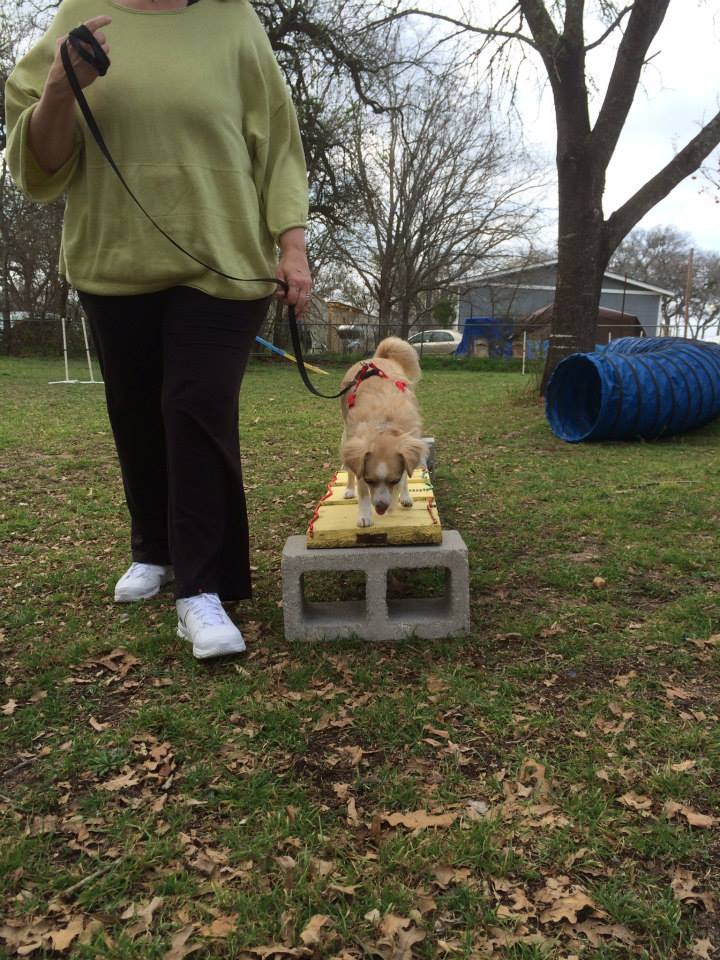
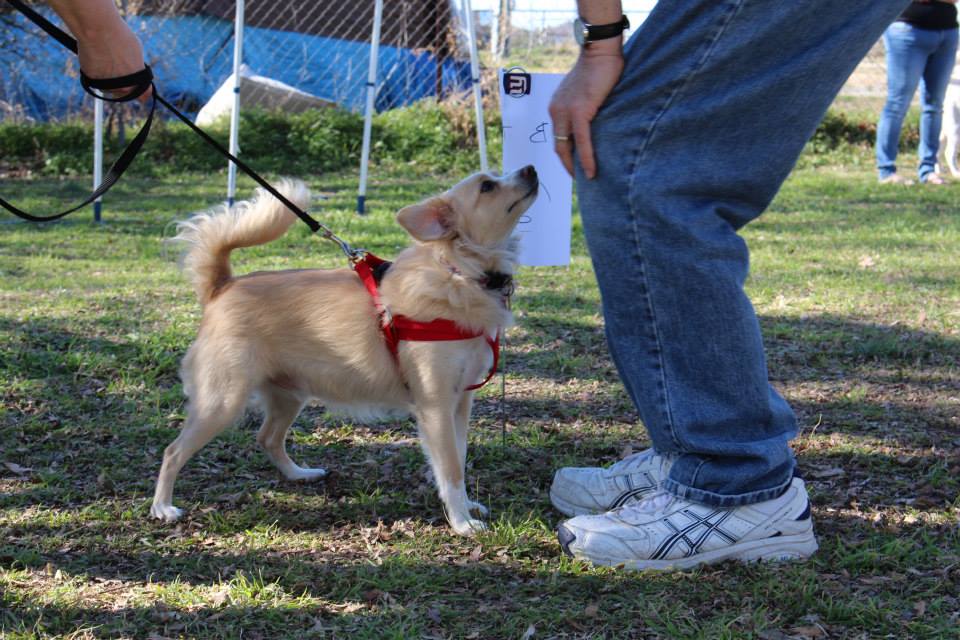
Lola, the dashing diva!!

Jo Anne & Brad adopted Lola, after they read her Craigslist ad placed by Austin Pets Alive. Lola had been hit by a car and knocked out cold. The person that had seen the accident rushed her to the emergency clinic where it had been touch and go! With some fantastic vet care and a fighting spirit, Lola pulled through and was sent on to an awesome foster family.

Lola was 10 months and exactly what Jo Anne & Brad needed for their other dog Bingo; a little playmate and companion.

Lola is very perky and always has some kind of toy in her mouth. She is a precision squeaker remover, barks when her big brother Bingo barks, and follows his lead if he runs to investigate something!

“No one even realizes Lola is deaf, her body language and behaviors are just like any other dog out there.” Jo Anne states about little Lola.

Jo Anne also makes a great point when asked if she would adopt another deaf dog, “Yes. She doesn’t get bothered by thunder- it’s a great quality in a dog.”

Come by our TDAWG classes or events to see little Lola and her TDAWG friends in action.

1780870_260703177424326_166425186_n 1902801_255906657903978_1026017817_n

Mother, protector, survivor…..Meet Gaia.

The day was August 14th, 2010. Animal control in Waco had found a family of 3 dogs, one mom, and 2 boys roaming around, no tags, no owners. I know, I know, this is not the first time you have heard this, and unfortunately not the last. What makes this story different? The dogs involved. A special little family, that have shown myself and countless others that life is precious. That what we think is impossible, is only that if we admit defeat or give up. Gaia, mom of this family, is the greatest example of strength, survival, and love for her family that I have ever known. This is her story.

The weather was hot, extremely hot- Waco had been in it’s 15th day of consecutive 100+ degree days. Heat like this, humans normally stay indoors in AC or in a pool. This little family had been abandoned outside, in the elements, left to fend for themselves. 

From mom’s point of view blackness, silence, and the mixed smells of heated concrete, dry brush, and her pups. The feel of crackling dry grass under her paw pads, no breeze at all that day, just heat on her very pink little skin.  Everyone across Texas had been battling with the drought, water restrictions were everywhere. So there were no puddles by freshly watered lawns to give Gaia or her pups relief from the heat, thirst and dryness. I often wonder how she found food and water for herself and pups, how she kept them safe on her own; but she did. Hunting in blackness with her nose, foraging through the silence with her touch, she kept her two sons safe even without seeing and hearing them. 

When Animal control picked them up and placed her into the truck, she was only able to smell and feel the human that restrained her and placed her into a moving box. Blackness, silence, vibrating cold metal around her and her pups shivering next to her side. The smell of cleaners and hundreds of other canines that had been in that very box before her and her pups had to have made her extremely unsure about what would happen next. 

When the box stopped vibrating, a few thuds made the box shake and the human smell returns. The touch is again restraining around her and the ground disappears beneath her paws. A thin, tight, rough feeling line is on her neck, putting pressure if she moves too quickly; more human smells and cold concrete under her paws now.  She continuously keeps track of her sons, with quick nose taps, and body checks. 

The humans guide her into yet another cold, stone box that we know as a shelter run. As she tries to move with the humans there is a cold metal pressing her nose in random areas, some areas she can place her nose through, others not so much. She feels a cold metal bucket and finds water and food. She stands by her sons and keeps them warm, and calm. 

The next day, one of her sons is no longer in the cold stone box, human smells again. A few hours later, more human smells and she feels the restraint against her body again. The ground disappears and she is again in a vibrating box. This time the vibrating box, is different, a human is gently petting her, her one son is curled up sleeping next to her. It is cool, and soft this time. The vibrating lasted a few hours and then stops. 

A couple more thuds, and more human smells. She is picked up and placed on the ground where she smells the familiar smell of grass again. Her son is right next to her, and she feels more gentle strokes. She walks with this new human and keeps going back to nose tap her son, she stands next to him in a calming manner each time he stops moving. She takes a couple of steps forward and waits for him to do the same. 

As I watched her confidently walk with me, I had an instant feeling of admiration for this blind and deaf mama dog. Through the blackness and silence, she protected, loved and survived with her little family. She showed trust to a species that originally placed her and her pups in harms way, she forgave humans for leaving her and her sons unprotected, and unfed. She taught her sons how to stay calm, brave, how to trust, and more importantly how to survive. 

Since that day in 2010, I have witnessed Gaia and her sons do some amazing things. I have seen them climb on top of items without knowing where the ground was, and run through yards and houses at top speed not knowing what was in front of them! I have witnessed her trust in me with each bath, nail trim and ear cleaning.  She has taught me that the only thing that stops you from achieving something is yourself. That life is valuable, rewarding and yes painful at times; but it is filled with new adventures that are just waiting for the right living being to concur them!

Gaia, is the mother, protector and survivor that we as humans, should learn from; I have.
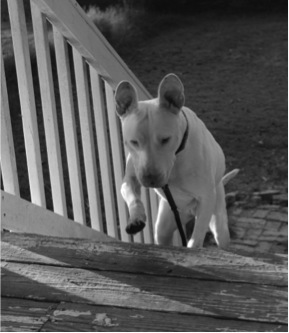
Gaia

Training a deaf/blind dog to do agility? YES!

We have a group of over 30 differently abled dogs, some are deaf, some are blind, some are both deaf & blind. Each week we get together and learn 30 minutes of obedience commands, and 30 minutes of agility training. Yes, agility. That wonderfully fun sport where dogs run on 12 inch wide boards, set to be 3-4 feet off the ground. Poles to weave around, jumps to jump, A-frames to climb and tunnels to barrel through.

How and why do I do this, it is exciting and fun both the owner, myself and more importantly, the dog itself!  It is rewarding for all involved and a great way to socialize our dogs. We do not compete, we do not challenge one another, we get together and enjoy the moments that our dogs take their first steps on a dog walk or their first weave around a pole that they can only smell and feel. We watch as our dogs entire bodies wiggle from nose to toes because they just achieved this task and we gave them all the love we have inside, to show them how proud we are of them.

The first time I saw my “grandpup” Charlie (who is deaf and blind), challenging himself to climb on top of a chair during our basic obedience class while we taught the “up” command, I knew he wanted to do more. His little tail was wagging so fast when he achieved this task, why would I deny him of learning more. When his mom asked me about agility, I said “absolutely” lets do it!  That was July of 2012, and we have not looked back since.

We use scents, texture and touch to teach our deaf and blind dogs, sign to teach our deafies, verbal commands along with touch and scent for our blind pups. For years I have been teaching all dogs different tasks, getting them working and helping owners understand them. “Each dog has a different way of learning and a different motivator”, I tell my furparents in any class I do. This is the very same mind set I have and share with my differently abled class. Each dog learns differently, it is normal; just as children learn differently.   You have to find what excites your dog, and sometimes you have to wait for them to overcome a fear or anxiety in order to help them learn a new task.


Most humans want to see a change immediately, but overlook the subtle changes that happen everyday in our dogs because it is not an amazing transformation in one hour. We are always in such a hurry we do not enjoy the little changes, the little achievements, the little tail wags. I teach all my furparents (TDAWG or not) how to see every subtle change and achievement in their dogs. Maybe the one dog that used to spin constantly, has started walking 5-10 steps in a straight line. That is awesome! Maybe a dog you couldn’t touch at all, can be touched for 30 seconds without running away; fantastic! Maybe it’s a dog that used to bark constantly at other dogs, that can do one piece of equipment right next to another dog silently; that is huge!

Dogs celebrate every second of life! Seriously, they wag their tails because you simply smiled at them, or pet them. They enjoy every moment we share with them and every task we do together. This is why we do TDAWG. We smile with a tail wag, we beam with happiness with each weave pole, we jump with praise because our dogs jumped a jump! TDAWG doesn’t just teach the dogs, it teaches the furparents to recognize and enjoy everything in life, even the small things.

Stop and celebrate with us, enjoy everything your furbaby achieves- even just a tail wag. Celebrate every second that leads you to every year, you get to smile because your furbaby is at your side.

-Tara and the pack


Differently Abled Myths and Facts


MYTH FACT
They are or will become aggressive. There has never been a documented fatality involving a differently-abled dog. They learn through touch, which makes them more tolerant to our natural rudeness of overly touching/coddling.
They startle easier. All dogs startle. The majorities of documented dog bites caused by startle, are from under-socialized and untrained hearing and seeing dogs. Differently-abled dogs use their sense of smell and typically know something is coming before a hearing and seeing dog does.
They need constant supervision. Hundreds of dogs with sight and hearing are admitted to surgery due to obstructions because they were left unattended. If you have a dog, any dog; you should own a crate.
They can hurt themselves if not protected. All dogs are in danger if not supervised. Differently-abled dogs learn their surroundings and memorize it. Most can navigate the environment smoother then hearing/seeing dogs. There are many cases where a dog that can hear and see, has run into something in an excited stage and injured him/herself. Differently-abled dogs count their steps, learn through scent and are more cautious which keeps them safer.
They come with high medical potential. Differently-abled dogs cost no more then others. They need the same routine health care as their brothers and sisters. They are not sick all the time.
They don’t play. The worst myth yet. All dogs play, differently-abled dogs play through scent and touch instead of hearing and sight. They play ball, chase, tug, and wrestle; just as all dogs do.
They can’t lead normal lives. Everyday, hundreds of differently-abled dogs lead normal lives. They adapt to their environment and adjust through other senses. They are natural survivors.
They can never be happy. They play, live, love and survive just as any dog out there. Ask any owner of a differently-abled dog and you will hear how excited they are by the presence of them, how affectionate they are, and how loyal they are. Differently-abled dogs truly do not know they are different. Other dogs play with them and treat them as any other pack member.
They can’t be housebroken. All of my clients have housebroken their dogs the same way, crate, leash and routine. It does not change because a dog cannot see or hear, consistency is key to housebreaking.
Transport stresses them out. Transport can be as smooth as any other dog. You have the same hurdles, car sickness or anxiety. Recommended transport is in a crate or seat-belted in a harness. The vibration tends to make them sleep.
They cannot live with children. All dogs have the potential to bite a child. I personally had sixty-four cases last year of child biters; all were hearing/seeing dogs. A differently-abled dog can do fine with a child as long as they are supervised and taught how to interact with them (the child that is).
There are no resources out there for help. There are rescues, trainers and groups out there to help adopters. We will post a list on our site soon.  We offer Skype/Facetime appointments for owners outside of Austin Texas and we also offer training to trainers interested in helping differently abled dogs.
It will stress them to have many hands touching them in rescue. On the contrary. The more hands that touch your differently-abled dog the better! This is a great way to socialize them.
They are long term fosters. Differently-abled dogs can and should be promoted just as the other dogs in your rescue. One great way to do this is to list the commands they already know- commands you must teach them for everyday life anyway. Go over the myth sheet and explain the focus they will get from their dogs. A great way to promote them to is to offer a 2-week foster to adopt program. Most people are more likely to adopt after they fall in love, if they feel they are not trappedinto a commitment.


If you have any questions at all, need help, or are interested in learning how to train a differently abled dog, please email us:


tdawginfo@gmail.com

Welcome to TDAWG- Texas Differently Abled Working Group

Mission Statement: 

Our mission is to change the way people think about differently abled dogs, and give them a chance to do what dogs love to do, work, play and love. This is a resource and rescue for deaf, blind, deaf/blind and amputees; we reach out to owners, rescues and shelters to help provide training, translation and support in living with and saving, differently abled dogs.

Goals:

Our ultimate goal is to reach rescues, shelters and owners nationwide by holding and attending events, sending out newsletters and supplying educational material to each of them so our differently abled dogs have a chance to show their working skills.

 The first few years we will try to reach out to as many shelters, rescues and veterinarians as possible, with educational materials and training sessions for staff, clients, and volunteers.

 Our educational material will be provided in written booklets, workshops, demonstrations and videos at a discounted fee when possible.

 Our success so far has reached central and northern Texas. We hope to reach outside of Texas in the very near future. 

We will be adding articles and more information about our group soon, thank you for your patience and interest!

Please email us at tdawginfo@gmail.com to contact us.